

Refrain
Director:Cui Zi En
Screenwriter:Cui Zi En
Cast:Yu Bo Wang Guifeng
Producer:Cui Zi’en Liu Shujing
Cinematographer:Shi Yue
Running Time:
Region:China
Year:2006
Language:Chinese
Production Company:CUIZI DV STUDIO
SYNOPSIS
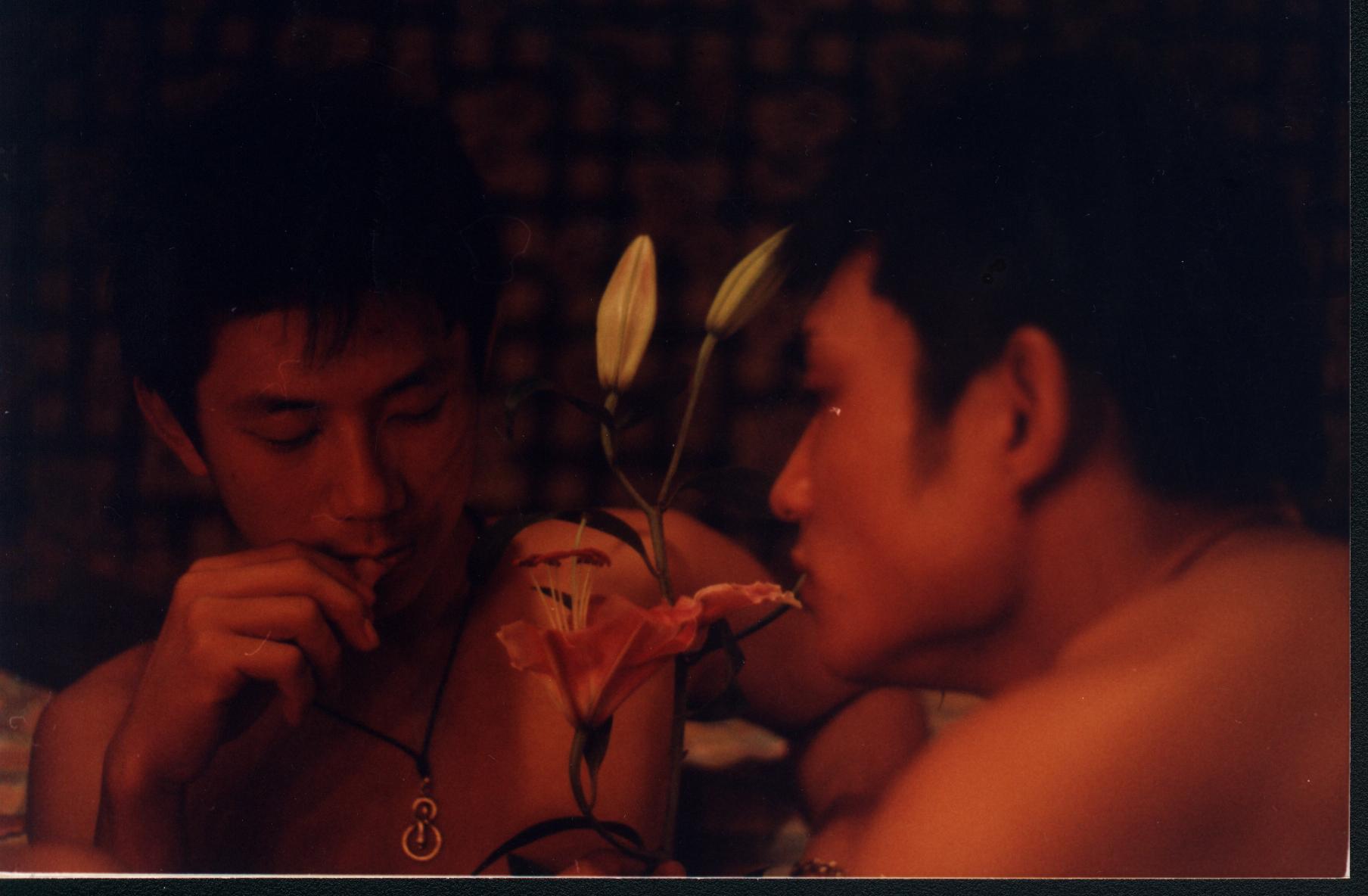
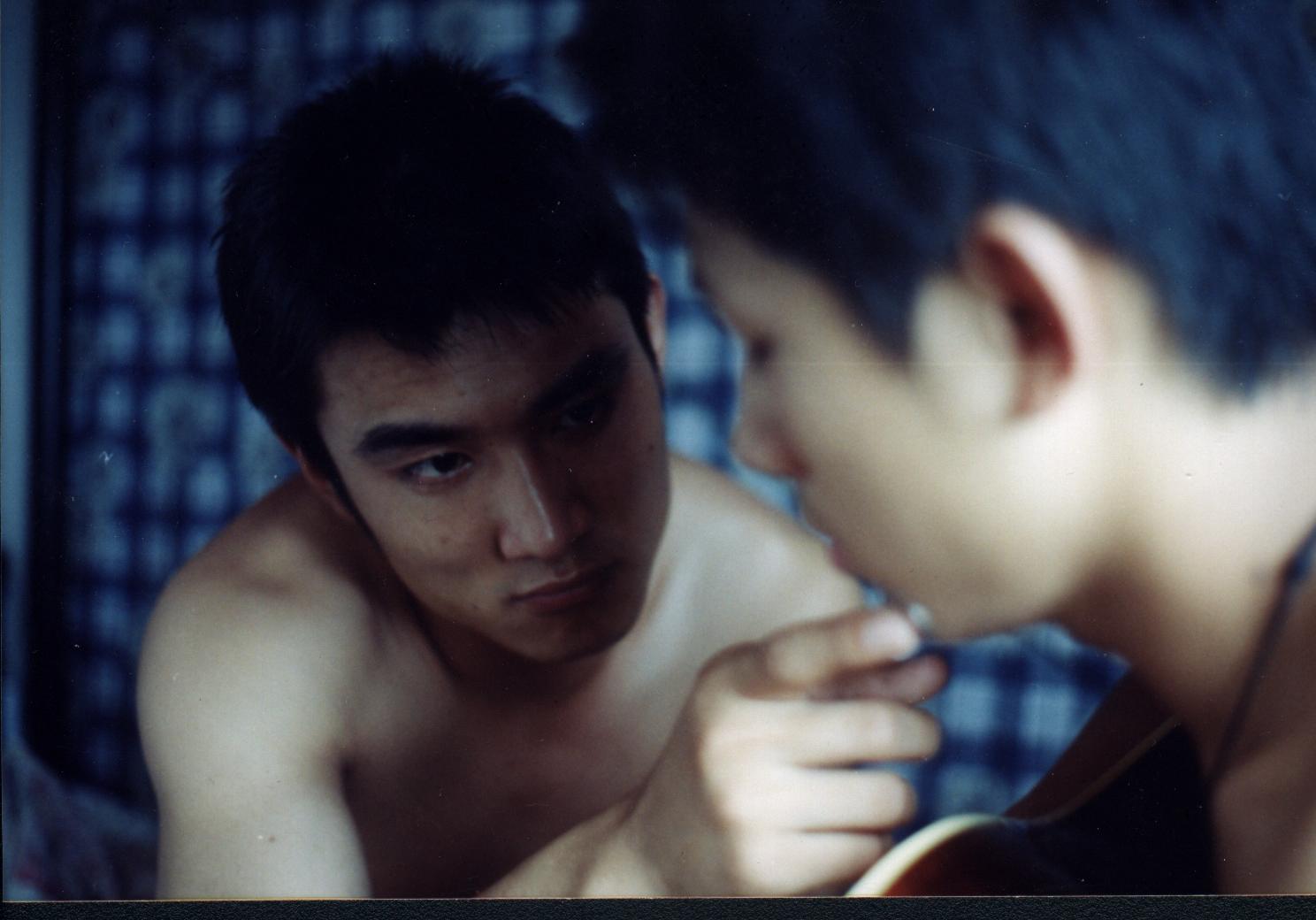
The big brother is retarded, and the little brother has AIDS. Since their parents abandoned them long time ago, they have been depending on each other for survival. The little brother feed the two on the earnings from his singings. Each song that the big brother can sing along was taught by the younger brother. Yet he had bits of knowledge about liturgy which the younger one didn’t know about. When the little brother knew he was approaching his end, he brought his brother to the nearby train station to have the last glance of the landscape they grew up with. He wanted to kill himself as well as his brother. However, the older one was very afraid of death and he wanted a final big feast. In the evening, the big brother cooked dinner for the younger one. They bathed each other’s feet afterwards, then they made love, till the little brother died in ecstasy. That’s the big brother’s way of letting the younger one feel eternal joy in his deep sleep.
Director Biography
Cui Zi'en, a native of Heilongjiang, is a devout Catholic with the baptismal name Peter, born under the sign of Leo. He holds a Master's degree in Literature from the Graduate University of the Chinese Academy of Social Sciences and serves as a second-level film screenwriter and associate professor at the Beijing Film Academy. Shaped by his early religious upbringing, Cui's works are infused with Christian elements, such as the Madonna image of Jin Jin Jin cradling a baby in his novel; the protagonist's hymns on the night of awaiting resurrection; speculations about the presence of Jesus on Mars; and the use of Psalms, Proverbs, and the Song of Songs to structure segments in his film "The Old Testament," along with scenes like Xiao Bo holding a Bible to call sinners to repentance... He skillfully resolves the irreconcilable tension between religion and homosexuality through beauty, making a remarkable attempt.

Director's Statement
Refrain is the second film in my Defiled Conduct Trilogy. It’s my favorite work to date. The cinematic language employed in this film is simple. There are only 11 takes and 2 actors in this 109 minutes long feature. It took altogether 5 afternoons and evenings to shoot the film. Yet I want this film to be layered with meanings. Refrain is a piece of social criticism. The two brothers in the film are abandoned by parents and neglected by social welfare programs. The younger brother strives to feed his retarded older brother and himself as a street singer. Leading a life at the very bottom of social hierarchy made it’s impossible for him to care about the safety issue in sex. He is infected with HIV and can’t afford any medication. The only way out of this plight that he can think of is to terminate the life of both himself and his older brother. This plight is a true depiction of a lot of people living in China today. I myself have encountered a situation like this. I can totally identify myself with the younger brother’s feeling of being driven to suicide. Refrain is also about ethics and love. The only two characters shown up in the film are the two brothers. They are prisoned by the larger outer world. In their extremely confined realm, the game-like sex between the two brothers is affectionate, but more importantly, it can be regarded as a mode of protest and subversion. When the younger brother died, the older brother mimicked the forensic photos-taking of the dead body – what it illustrates is that the society refused to take care of them, yet it kept surveilling them. Refrain is also about redemption. The younger brother doesn’t trust the society; therefore he wants the older one to die with him. However, the older one has an unconditional faith in the sacred power of lily flowers and bread/Holy Communion. It may seem that he didn’t save his brother from death, but he redeemed himself by surviving. This is a story of mystery and sacredness. (Translation: Zhang Hui)


Leave a Comment